
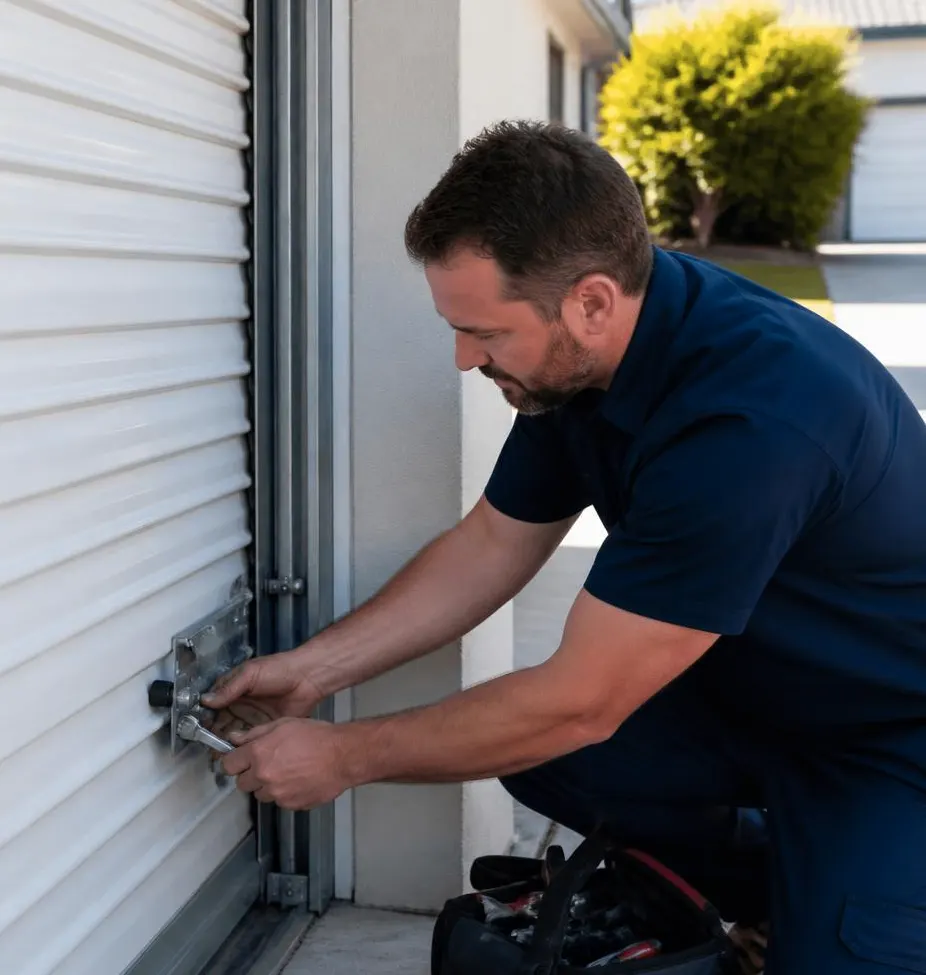
What a Technician Sees This Time of Year
By late October and into November, our service calls shift. Instead of summer heat complaints, we're out looking at doors that won't seal at the bottom, openers that hesitate on cold mornings, and springs that suddenly snap after months of quiet operation. Most of these problems were small in September and became obvious the first week temperatures dropped into the 30s overnight. Getting ahead of that now, while it's still easy to work outside, saves a cold-weather emergency call later.
Check the Weatherstripping Before the First Freeze
The rubber seal along the bottom of the door and the vinyl strips along the sides do more work than most homeowners realize. After a humid summer, that rubber is often soft and starting to crack. Once temperatures drop, it hardens and loses its ability to flex against the floor, which is how cold air, mice, and wind-driven rain get into the garage.
- Run a hand along the bottom seal - if it's stiff, cracked, or pulling away from the track, replace it now rather than in January.
- Check the side and top seals for gaps you can see daylight through.
- If your garage shares a wall with living space, a worn seal is often why that room feels drafty in winter.
Springs and Cold Weather Don't Mix Well
Steel contracts in the cold, and that changes the tension on your torsion or extension springs. A spring that was fine all summer can become brittle and fail on the first truly cold morning, usually with a loud bang and a door that won't open. This is the single most common reason for emergency repair calls between November and February.
Signs a spring is near the end of its life: the door feels heavier than it used to when lifted manually, it doesn't stay open halfway on its own, or you can see visible gaps or rust spots along the coil. Springs are rated for a certain number of cycles, and most last several years - but age plus cold is a bad combination. If yours is original to an older house, or you can't remember the last time it was replaced, fall is the right time to have it checked rather than waiting for it to fail with a car trapped inside.
Keep the Opener and Sensors Working in Freezing Temps
Garage door openers rely on a drive mechanism - chain, belt, or screw - that needs proper lubrication to handle cold. Grease that's thick or dried out makes the motor work harder and can strip gears over time. A light silicone-based lubricant on the rail and hinges before the cold sets in keeps things moving smoothly.
Also check the safety sensors near the bottom of the tracks. Condensation and frost can build up on the lenses during cold, humid mornings, which causes the door to reverse or refuse to close. Wiping them down periodically through the winter is a quick fix that avoids a frustrating troubleshooting session on a freezing evening.
Address Rust and Moisture Before It Spreads
This area gets heavy rain and occasional coastal storms well into the colder months, and that moisture doesn't stop just because it's winter. Hinges, rollers, and the bottom edge of steel doors are the first places rust shows up, especially on older housing stock where original hardware may still be in place. A light coat of lubricant on hinges and rollers, and a check for standing water or drainage issues near the base of the door, prevents rust from working its way into moving parts where it causes real damage.
Older vs. Newer Homes Need Different Attention
Older garages in this area often have single-layer doors with minimal insulation, which means more temperature swings on the hardware and more condensation on cold mornings. Newer construction tends to have insulated doors and tighter seals, but even these benefit from an annual check - insulation doesn't fix a worn seal or a spring that's reaching the end of its cycle count.
When to Call Middletown Garage & Gate
If your door is slow to respond in the cold, the spring looks worn, or the seals are too far gone to fix with a simple strip replacement, it's time for a professional look rather than a DIY attempt - springs in particular are under serious tension and not safe to handle without the right tools. Our Preventive Maintenance service covers exactly this kind of pre-winter check: springs, hardware, seals, and opener function, all inspected before the cold exposes a bigger problem. If a spring has already failed, our Spring Replacement service gets it swapped safely and correctly, matched to your door's weight and size.
If you're in Middletown, Townsend, Odessa, Smyrna, Clayton, Bear, Newark, or Dover and want your garage door ready before the next cold snap, give Middletown Garage & Gate a call. We'll check it out and get it handled before winter makes the decision for you.