
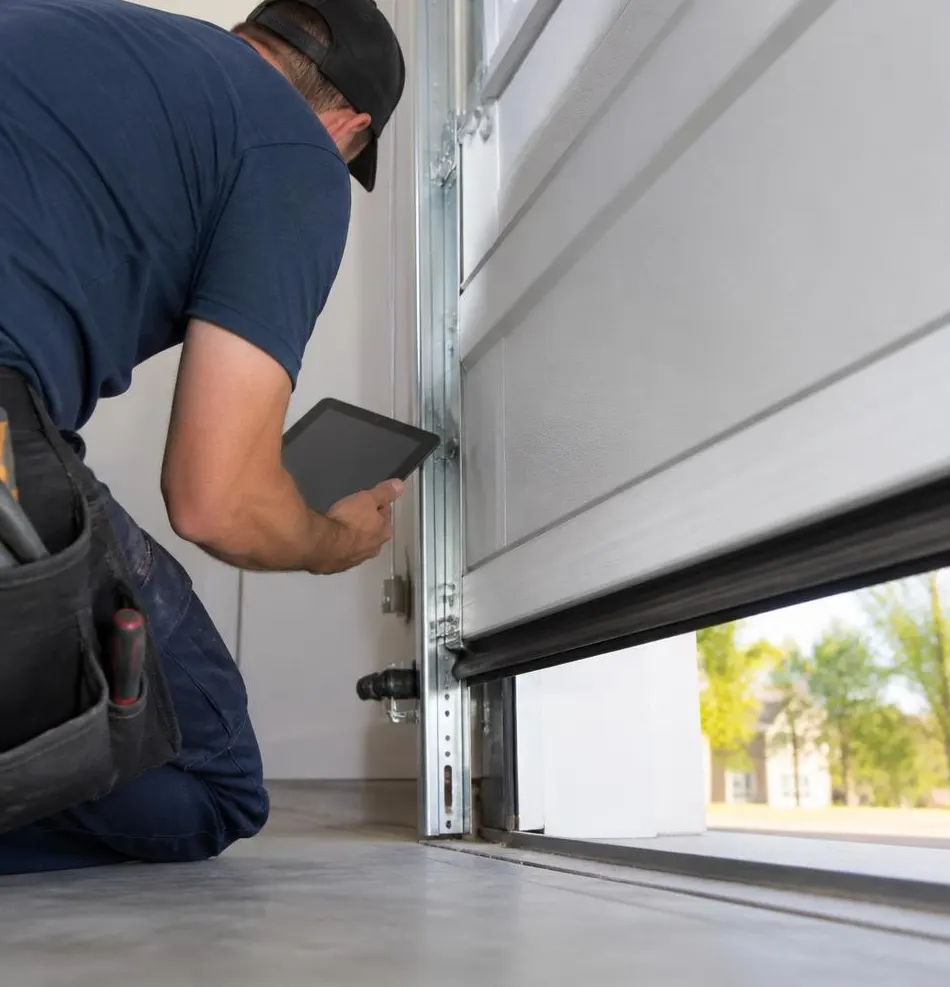
What a Technician Sees on a Typical Call
A lot of service calls in this area start the same way: a door that's been running fine for months suddenly starts grinding, sagging on one side, or refusing to close all the way. When a technician pulls the panel off or gets a flashlight on the track, the cause is rarely a mystery. It's usually dried-out rollers, a track that's crept out of alignment from a house settling over the seasons, weatherstripping that's cracked and letting in drafts, or hardware that's worked itself loose from months of vibration. None of it happened overnight. It built up quietly because nobody looked.
With the mix of old and new housing around Middletown, Townsend, Odessa, and the surrounding towns, garage doors see a wide range of stress—humid summers that swell wood and warp seals, icy winters that stiffen springs and crack rubber, and heavy rain that finds its way into tracks and hardware. A seasonal check catches small problems while they're still cheap and easy to fix, instead of letting them turn into a stuck door or a snapped cable.
Tools You'll Need
- Flashlight or headlamp
- Work gloves
- A stiff brush or small shop vac
- A clean rag
- Silicone-based garage door lubricant (not WD-40 or grease)
- A step stool
- An adjustable wrench or 10mm socket wrench
The Homeowner's 20-Minute Routine
- Look at the tracks. With the door closed, run your flashlight along both vertical and horizontal tracks. You're looking for dents, gaps where the track has pulled away from the wall, or visible debris. A slight gap of daylight between the roller and track is normal; a track that's visibly bent or bowed is not.
- Check the rollers and hinges. Open the door partway and watch the rollers as they move. Listen for grinding or a rough, catching motion instead of a smooth roll. Worn nylon rollers often look chipped or flat on one side.
- Inspect the weatherstripping. Run a hand along the rubber seal at the bottom of the door and the vinyl strip where the door meets the frame. Brittle, cracked, or torn seals let in rain and cold air, and they're an easy, low-cost swap compared to what they're protecting against.
- Tighten visible hardware. Using your wrench, snug up the bolts on the track brackets and hinges — the ones holding the track to the wall and the panels together. Don't touch anything connected to the springs or the cables running along the sides of the door; that's tensioned hardware, and it's not a DIY area.
- Clean and lubricate. Wipe down the tracks with your rag to clear dust, pollen, or grit, then apply a light coat of silicone-based lubricant to the rollers, hinges, and the track itself. Skip the springs entirely — they need a different kind of attention, and over-lubricating them can cause more harm than good.
- Wipe the photo-eye sensors. These are the two small sensors near the bottom of the track on each side. A dusty or spider-webbed lens can trick the opener into thinking something's blocking the door, especially after a stretch of humid weather or rain.
- Test the auto-reverse safety feature. Place a piece of wood or a rolled towel on the ground where the door closes. Run the door down — it should reverse the moment it touches the object. If it doesn't, stop using the opener until it's looked at; this is a safety issue, not a convenience one.
- Check the balance. Pull the manual release cord to disconnect the opener, then lift the door by hand about halfway. It should stay in place on its own. If it slides down or shoots up, the springs are out of balance — and that's where your 20 minutes ends.
Where the Line Is
Everything above — visual checks, cleaning, lubrication, light hardware tightening, and safety testing — is safe for a homeowner to handle without special tools or training. What's off-limits is anything involving the torsion or extension springs, the lift cables, or a door that fails the balance test. Those parts are under heavy tension and are a leading cause of injury when handled without the right equipment. If your inspection turns up a bent track, a door that's noticeably off-balance, cables that look frayed or rusted, or an opener that isn't reversing properly, that's the point to stop and call it in.
When to Call Middletown Garage & Gate
If your seasonal check turns up a balance problem, a damaged track, or hardware that's rusted past the point of tightening, it's worth having a technician take a look before the next freeze or storm season adds more stress to the system. Our Preventive Maintenance visits cover a full inspection of springs, cables, tracks, and opener settings — the parts of the routine that go beyond what's safe to do from a step stool. And if the balance test shows a spring that's lost its tension, our Spring Replacement service handles it properly, with the right tools and the right parts for your door's weight and size.
If you're in Middletown, Townsend, Odessa, Smyrna, Clayton, Bear, Newark, or Dover and your twenty-minute check turned up something more than a dusty sensor or a loose bolt, give Middletown Garage & Gate a call. We'll get a technician out, diagnose it straight, and get your door back to running the way it should before winter settles in for good.