
The Bang You Heard Last Night Wasn't Nothing
It usually goes like this: sometime overnight, or early on a cold morning, you hear a loud bang from the garage — sharp enough that you wonder if something fell off a shelf. The next time you try the opener, the door barely budges, or it lurches up a few inches and stops. You walk over, look up at the torsion spring above the door, and see it split clean in two, the coils pulled apart with a visible gap. Or maybe it's one of the older stretched-style springs along the side rails, now hanging slack and twisted.
Your first instinct might be to grab a wrench, watch a video, and knock the job out before work. That instinct is exactly how people end up in the emergency room.
Why a Broken Spring Isn't Like a Broken Hinge
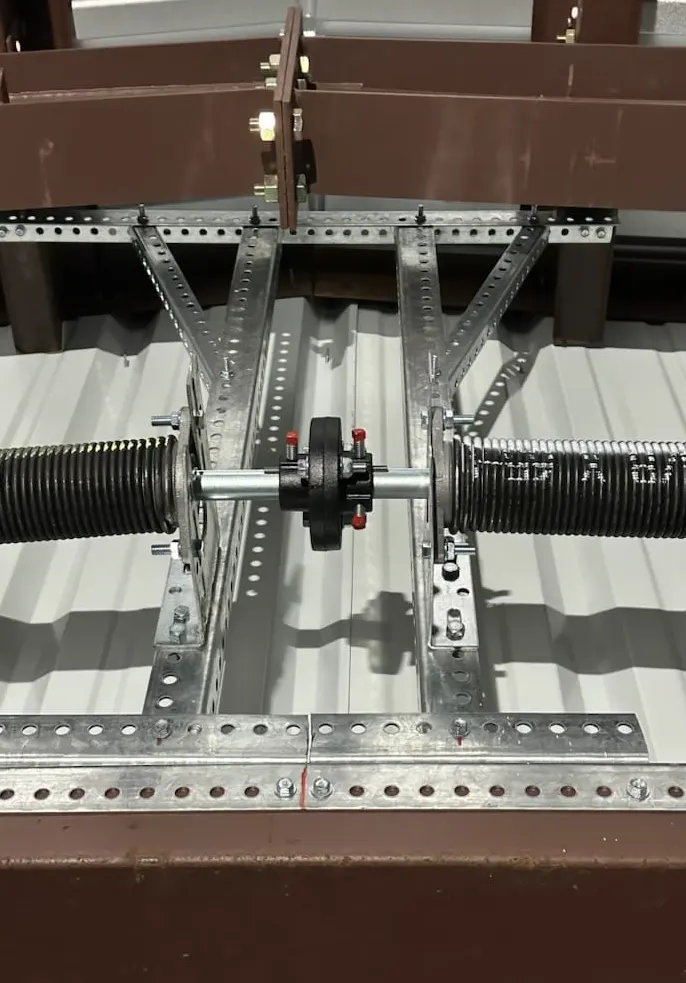
A garage door spring isn't just holding tension — it's doing the lifting work your muscles would otherwise have to do every time the door opens. A typical residential door weighs somewhere in the 130 to 400 pound range depending on material and size, and the torsion spring is wound tight enough to counterbalance nearly all of that weight. When it's intact, that energy is controlled. When it breaks, or when someone tries to wind or unwind it without the right tools, that energy has to go somewhere — and it goes fast.
Extension springs, the kind stretched along the horizontal tracks on older setups, store the same kind of energy differently. Without a safety cable threaded through the center, a snapped extension spring can become a projectile, not just a mess on the floor.
What Actually Goes Wrong When People Try It Themselves
This isn't a theoretical warning. The injuries that come from DIY spring work follow a few predictable patterns:
- The winding bar slips. Torsion springs are wound and unwound using steel winding bars inserted into the cone, one quarter turn at a time. A screwdriver, a standard wrench, or a bar that isn't fully seated can slip under load, releasing the spring's full tension in an instant — often straight at the person's hands, arms, or face.
- A cable lets go under tension. The lift cables work alongside the springs, and if a door is only partially supported when a cable is loosened or removed, it can whip violently. These cables are thin, under real load, and capable of deep lacerations.
- The door itself falls. If someone disconnects a spring without first clamping the door securely in the track with locking pliers, the entire door can drop without warning — a serious crush risk for hands, feet, or anyone standing nearby.
- Sharp coil ends cause cuts on contact. Even a spring that's already broken can have enough leftover tension in the unbroken coils to snap shut on fingers during removal.
The Specific Mistakes That Lead to the ER
Most DIY spring injuries trace back to a short list of avoidable decisions:
- Using the wrong tool — a screwdriver or adjustable wrench instead of properly sized winding bars.
- Not counting and matching the exact number of turns the spring was wound to, leading to an uneven or sudden release.
- Skipping the step of clamping the door in the track before working on the spring system.
- Working alone, with no one nearby if something goes wrong.
- Only replacing one spring on a double-spring door, leaving mismatched tension that stresses the new spring and the opener.
Why This Time of Year Makes It Riskier
Delaware's swing from humid summers to icy winters is hard on spring hardware. Months of heavy rain and humidity promote rust on the coils and mounting brackets, and rust doesn't just weaken metal evenly — it creates stress points where a spring is more likely to snap suddenly rather than wear down gradually. Then, as temperatures drop, cold metal contracts and becomes more brittle, which is why so many spring failures show up right around the first hard freeze.
Older homes in the area still running original extension springs — without the safety cables now standard on new installations — carry extra risk in this kind of weather. If you don't know which type of spring is on your door, that's worth finding out before it fails, not after.
What You Can Safely Do When a Spring Breaks
- Don't force the opener to keep trying — this can burn out the motor and puts more stress on cables that are now carrying the door's full weight.
- If the door is already down, you can use the manual release cord to disconnect the opener, but don't attempt to lift the door yourself once the spring is gone.
- Keep kids and pets away from the immediate area — a door with a broken spring can shift unexpectedly.
- Take a photo of the spring from a safe distance so a technician can identify the type and size before arriving.
- Leave the winding cones, cables, and brackets alone entirely.
When to Call Middletown Garage & Gate
This is exactly the kind of repair we handle every week — Spring Replacement with correctly matched torsion springs (not a mismatched single spring), proper winding using the right bars, and a full check of the cables, drums, and pulleys that share the load. If something else seems off once the door is moving again — opener strain, track misalignment, a door that's suddenly louder than usual — our Garage Door Repair service covers the rest of the system so you're not back here in a month with a different problem.
If you've heard that bang in the garage, or you've got a door that won't budge, call Middletown Garage & Gate. We serve Middletown, DE and the surrounding area, and we'll get your spring replaced safely and your door back in working order.