
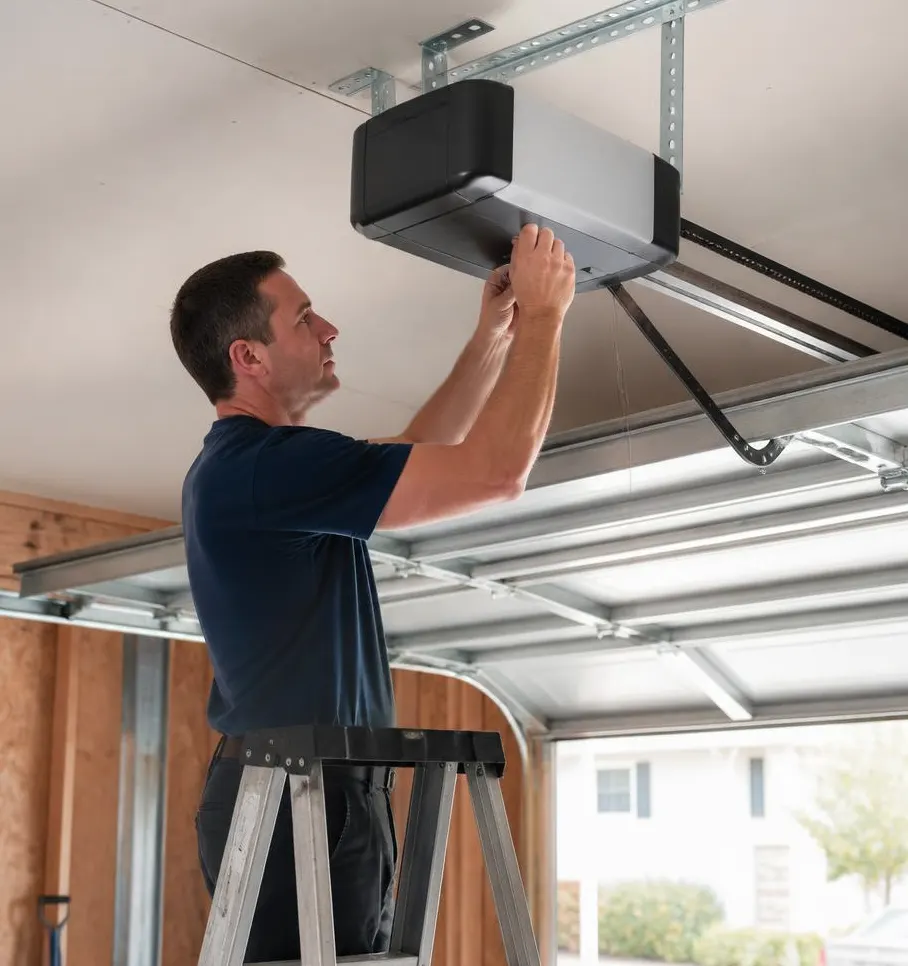
What a Technician Sees on a Typical Fall Call
By the time most homeowners call about storm damage, the signs have usually been building for a while. A tech shows up and finds a track bowed outward an inch or two from where wind pushed on the door during a storm. Rollers have popped out of their housing and are hanging by the cable. The bottom panel is dented inward where standing water from heavy rain backed up against the slab and froze overnight. Weatherstripping has pulled loose and curled, letting wind-driven rain soak the drywall behind it. None of this happens all at once—it's the result of a door that went into storm season already a little worn, and then got pushed past its limit.
Why the Garage Door Is the Weak Point
A garage door is the largest moving opening in most homes, and it's built from thinner material than a wall. When wind hits a house, pressure builds on the windward side and drops on the leeward side. If a garage door fails—buckles inward or blows off its tracks—that pressure difference suddenly has a path into the house, and it can push upward on the roof structure from the inside. Older homes in this area, many built before wind-rated garage doors were common, often have standard track hardware and lighter-gauge panels that were never designed for sustained gusts or the kind of coastal storm activity that can roll through in late fall and winter. Newer builds may have heavier doors, but the opener, springs, and track hardware still age the same way and need the same attention.
Inspect the Track and Rollers
Stand outside and look down the length of each track while the door is closed. The rails should run straight and parallel, with no visible gaps where the track has pulled away from the frame. Worn or cracked rollers are a common failure point—if a roller lets go during a wind event, the door can come off the track entirely. Tightening loose track bolts and replacing rollers that show flat spots or cracking is inexpensive compared to what happens if the door fails mid-storm.
Check Weatherstripping and Bottom Seal
Heavy rain finds every gap. Run a hand along the bottom seal and side weatherstripping—if it's cracked, flattened, or pulling away from the frame, water will get under it during a hard rain and pool inside the garage. That pooled water is also what freezes against the bottom panel once temperatures drop, which is how a lot of winter dents and rust spots start.
Test the Springs Before Cold Weather, Not After
Torsion springs lose tension gradually, but cold weather makes that loss more noticeable—metal contracts slightly, and a spring that was already weak can suddenly feel like it's not pulling its weight at all. A door that's been slow to open all fall, or one that slams down the last foot instead of lowering evenly, is telling you the springs are near the end of their life. Replacing a spring before it snaps is far safer than dealing with a broken one in freezing temperatures.
Plan for Power Outages
Coastal storms and high wind are a reliable way to lose power for a few hours or longer. If the opener doesn't have a working battery backup, a power outage means the door is stuck wherever it was last left—often open, if it failed mid-cycle. Battery backup systems exist for most modern openers and are worth adding if the current setup doesn't have one.
Don't Forget Gates
Gates take wind load directly, and a gate left unlatched or with a worn hinge can swing hard enough in a gust to bend the frame or snap a hinge pin. Icy conditions add another failure point—moisture gets into hinge mechanisms and automatic gate motors, then freezes, which can strip gears or crack housings. A quick check of hinges, latches, and any automated hardware before the cold sets in is worth the time.
When to Call Middletown Garage & Gate
If a track looks bent, a spring sounds different, or the door hesitates before it moves, that's the time to call—not after the next storm finishes the job. Middletown Garage & Gate handles preventive maintenance visits that cover track alignment, roller condition, weatherstripping, and spring tension in one trip, so small issues get caught before a wind event turns them into a stuck or damaged door. For doors that are already showing spring wear or opener trouble, spring replacement and garage door opener service are usually the fastest path back to a door that closes fully and seals properly against rain and wind.
If your garage door has been acting up heading into storm season, call Middletown Garage & Gate and get it checked before the next front comes through Middletown, DE.