
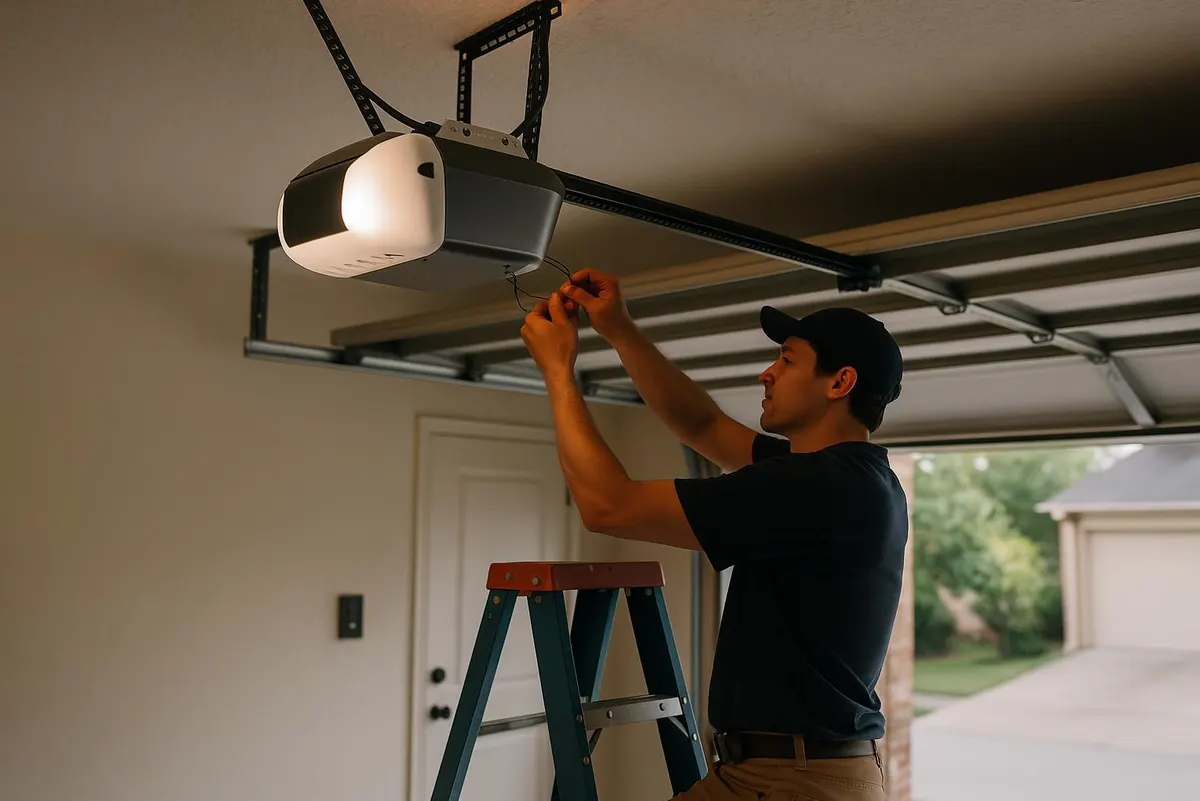
Most loud garage door openers are noisy because of loose hardware and dry metal, not because the opener itself is failing. The exceptions worth knowing: grinding or metal-on-metal sounds, popping or banging that only happens in freezing weather, and a screeching chain that's stretched past adjustment. Those three point toward wear that lubrication won't fix.
Tools You'll Need
- Socket wrench or adjustable wrench set
- White lithium grease (not WD-40 or motor oil)
- Rag or old towel
- Flashlight
- Ladder tall enough to reach the track and opener rail safely
- Replacement nylon rollers (optional, for step 4)
Step-by-Step: What You Can Do Yourself
- Disconnect the opener and open/close the door by hand first. This tells you whether the noise comes from the door and track or from the opener unit itself. If the door is quiet by hand but loud with the opener running, the problem is in the opener's chain, belt, or mounting.
- Tighten every bolt and screw you can reach. Garage doors cycle thousands of times a year, and humid summers followed by freezing winters cause metal to expand and contract, which loosens hardware over time. Check the track brackets, the hinges between panels, and the bolts holding the opener's rail to the ceiling bracket. A quarter-turn with a socket wrench often eliminates a rattle completely.
- Lubricate the moving metal parts. Apply white lithium grease to the rollers, hinges, and the opener's chain or screw drive. Wipe off the excess so it doesn't collect dust. Avoid WD-40 on moving parts long-term since it attracts grit rather than repelling it. Do this once in late fall before the cold sets in and again in late spring.
- Inspect the rollers. Steel rollers are louder by design and tend to get noisier as they age. If yours are original to an older house and making a grinding sound, swapping them for nylon rollers is a reasonable DIY project for anyone comfortable on a ladder — just replace one at a time so the door stays supported, and never touch the rollers nearest the bottom bracket if the door uses torsion springs under tension.
- Check chain tension if you have a chain-drive opener. A loose chain slaps against the rail with every cycle. Most openers have an adjustment nut or bolt near the motor head; consult your opener's manual for the exact turn amount, since over-tightening strains the motor.
- Add isolation padding under the motor unit. A thin rubber pad between the opener's mounting bracket and the ceiling joist absorbs vibration that would otherwise transmit through the framing and get louder than the opener actually is. This matters more in newer construction with lighter joist spacing than in older homes with heavier framing.
- Listen again after each step. Don't do all six steps and then test — tighten, lubricate, and check progress along the way so you know what actually fixed the noise, in case it comes back later.
When the Noise Means Something a Homeowner Shouldn't Touch
Some sounds are warnings, not annoyances:
- A loud bang or pop, especially on a cold morning, often means a torsion spring under tension shifting or nearing failure. Springs store enough force to cause serious injury and should only be handled by a technician.
- Grinding from the opener's gear housing usually means the internal gear is stripped, which requires opening the unit — not a weekend fix.
- A chain or belt that's visibly frayed, cracked, or sagging badly needs replacement before it fails mid-cycle.
- Noise that persists after lubrication and tightening often means worn bearings in the trolley or a bent track, both of which need proper alignment tools to fix correctly.
If you've gone through the DIY steps above and the opener is still loud, or if you're dealing with a decades-old chain-drive unit that rattles no matter what you do, a belt-drive swap is often the real fix. Belt-drive openers run significantly quieter than chain-drive models and hold up well through Delaware's humid summers and icy winters, but installation involves rewiring the opener head and properly tensioning a new rail — not a first-time DIY job.
When to Call Middletown Garage & Gate
If you've tightened hardware, greased the moving parts, and the door is still groaning, banging, or grinding, it's time to bring in a technician. Middletown Garage & Gate handles everything from garage door opener services — including belt-drive conversions for homeowners ready to trade a noisy chain for a quiet ride — to full spring replacement when a popping sound turns out to be a spring on its way out. We'll also check the track alignment and rollers while we're there, since a noisy opener and a slightly bent track often go hand in hand, especially in older Middletown-area homes that have seen a few decades of seasonal freeze-thaw cycles.
If your garage door is keeping the whole house up at night, give Middletown Garage & Gate a call. We serve Middletown, Townsend, Odessa, Smyrna, Clayton, Bear, Newark, and Dover, and we're happy to track down the source of the noise and fix it right the first time.